


Gulf Stock Markets Mixed Amid US Tariff Fears — What Investors Need to Know
In July 2025, Gulf stock markets faced uncertainty and volatility due to the announcement of new US tariffs on key global sectors. The ripple effects were felt across major indices like Saudi Arabia’s TASI, Dubai’s DFMGI, Abu Dhabi’s FADXGI, and Qatar’s QSI. The concerns are primarily linked to tariff escalations aimed at BRICS-aligned nations, oil output decisions by OPEC+, and fragile global investor confidence.
In this detailed report, we analyze:
-
Major Gulf market movements
-
Sector-specific impact
-
Oil price linkages
-
Investor sentiment
-
Strategic investment outlook
Key Takeaways:
-
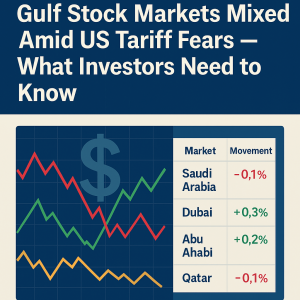
Saudi TASI fell by 0.1% while Dubai and Abu Dhabi gained 0.3% and 0.2% respectively.
-
US tariff threat on BRICS nations fuels investor concern.
-
OPEC+ decision to increase oil output by 548,000 bpd is keeping oil prices under pressure.
-
Gulf markets are reacting cautiously, especially in real estate, telecom, and banking sectors.
Market Performance Overview – July 9, 2025
| Market | Index | Movement | Notable Activity |
|---|---|---|---|
| Saudi Arabia | TASI | -0.1% | Al Rajhi Bank, ACWA Power dipped |
| Dubai | DFMGI | +0.3% | Emirates NBD, DIB gained |
| Abu Dhabi | FADXGI | +0.2% | ADNOC Drilling rose |
| Qatar | QSI | -0.1% | QIB and Industries Qatar dipped |
Gulf stock market, TASI performance, US tariffs, OPEC+ output, Dubai stock exchange, Qatar market reaction.
What Triggered the Market Jitters?
US Tariff Threats:
The White House has imposed or threatened up to 50% tariffs on key sectors including tech, metals, and pharmaceuticals—mainly targeting BRICS countries, of which UAE is a participant. Though Saudi Arabia is not formally a member, its collaboration with the bloc has led to fears of collateral impact.
🛢️ Oil Price Pressure from OPEC+:
OPEC+ agreed to raise production by 548,000 barrels per day (bpd) starting in August 2025. While this decision may stabilize global supply, it also pushes Brent crude prices downward, directly affecting revenue expectations of Gulf oil-exporting economies.
Sector-Wise Impact: Winners and Losers
🔹 Banking Sector
Winners:
-
Dubai’s Emirates NBD and Dubai Islamic Bank showed gains due to robust earnings reports.
-
Qatar Islamic Bank offered resilience despite market jitters.
Losers:
-
Al Rajhi Bank in Saudi Arabia dipped due to general market pressure and cautious lending outlook.
🔹 Real Estate
-
Dubai’s Emaar Properties saw marginal gains with signs of investor optimism in real assets.
-
Abu Dhabi’s developers traded flat, with investors awaiting Q2 earnings data.
🔹 Energy & Utilities
-
ADNOC Drilling rose in Abu Dhabi, benefiting from expected contract inflows.
-
ACWA Power in Saudi Arabia dropped slightly amid project cost inflation fears.
🔹 Telecom & Industrials
-
STC (Saudi Telecom) faced a minor drop due to foreign investment withdrawal concerns.
-
Industries Qatar remained stable, showing resilience in heavy industry.
Investor Sentiment: Fragile but Not Broken
Despite market fluctuations, sentiment remains cautiously optimistic:
-
Fed rate cut expectations are helping global risk appetite.
-
Some emerging market debt inflow is returning to the Middle East.
-
Retail investors are holding positions, expecting clarity post US tariff deadlines in August.
🔗 Related Blog: Emerging Market Debt Surges as Gulf Leads Issuance
Oil Prices & Gulf Stocks: The Interconnected Web
Brent crude is trading around $81–83 per barrel, fluctuating with:
-
OPEC+ output hikes
-
US inventory data
-
Global manufacturing forecasts
Impact:
Every $1 drop in oil prices translates into billions lost in export revenues for Gulf nations—impacting budget allocations, sovereign fund withdrawals, and even stock market liquidity
Forecast & Recommendations
✅ Short-Term Strategy:
-
Focus on banking and energy stocks with strong dividend history.
-
Reduce exposure to telecom and logistics, which are tariff-sensitive.
📌 Long-Term Outlook:
-
UAE and Saudi market fundamentals remain solid due to Vision 2030 projects.
-
Economic diversification will help reduce oil dependency risks.
-
Watch Fed interest rate decisions and tariff enforcement for clearer signals.
🔗 Internal Links for Related Reads:
🌍 External Links for Authority:
Final Thoughts
US tariff policy is not just a Western economic affair—its tremors are shaking up markets across the Gulf. From oil price dependencies to foreign capital inflows and policy alignment with BRICS, every move carries consequences.
Gulf investors need to adopt a calculated, data-backed approach and remain focused on resilient sectors while global trade tensions unfold.
Keywords Focused On: Gulf stock markets, US tariffs, TASI index, Dubai stock exchange, OPEC oil output, investor sentiment, sector analysis, Qatar stocks, BRICS impact